Mirin vs Shaoxing Cooking Wine: What Is the Difference?
Short answer: mirin (みりん) is Japanese, sweet and low in alcohol — its job is to add gloss, roundness and a gentle sugar note to glazes like teriyaki. Shaoxing wine (料酒 / 绍兴酒) is Chinese, dry and savoury with a sherry-like depth — its job is to strip the raw smell from meat and fish and add fermented complexity to stir-fries and braises. One sweetens, the other cleans and deepens.
Both bottles say "rice wine" on the label, both sit in the same aisle of the Asian grocery, and both are described in recipes as "cooking wine" — which is exactly how people end up with sweet, sticky mapo tofu or flat, fishy teriyaki. They come from different cuisines and do genuinely different jobs. Once you have tasted them side by side, straight from the spoon, you will never mix them up again.
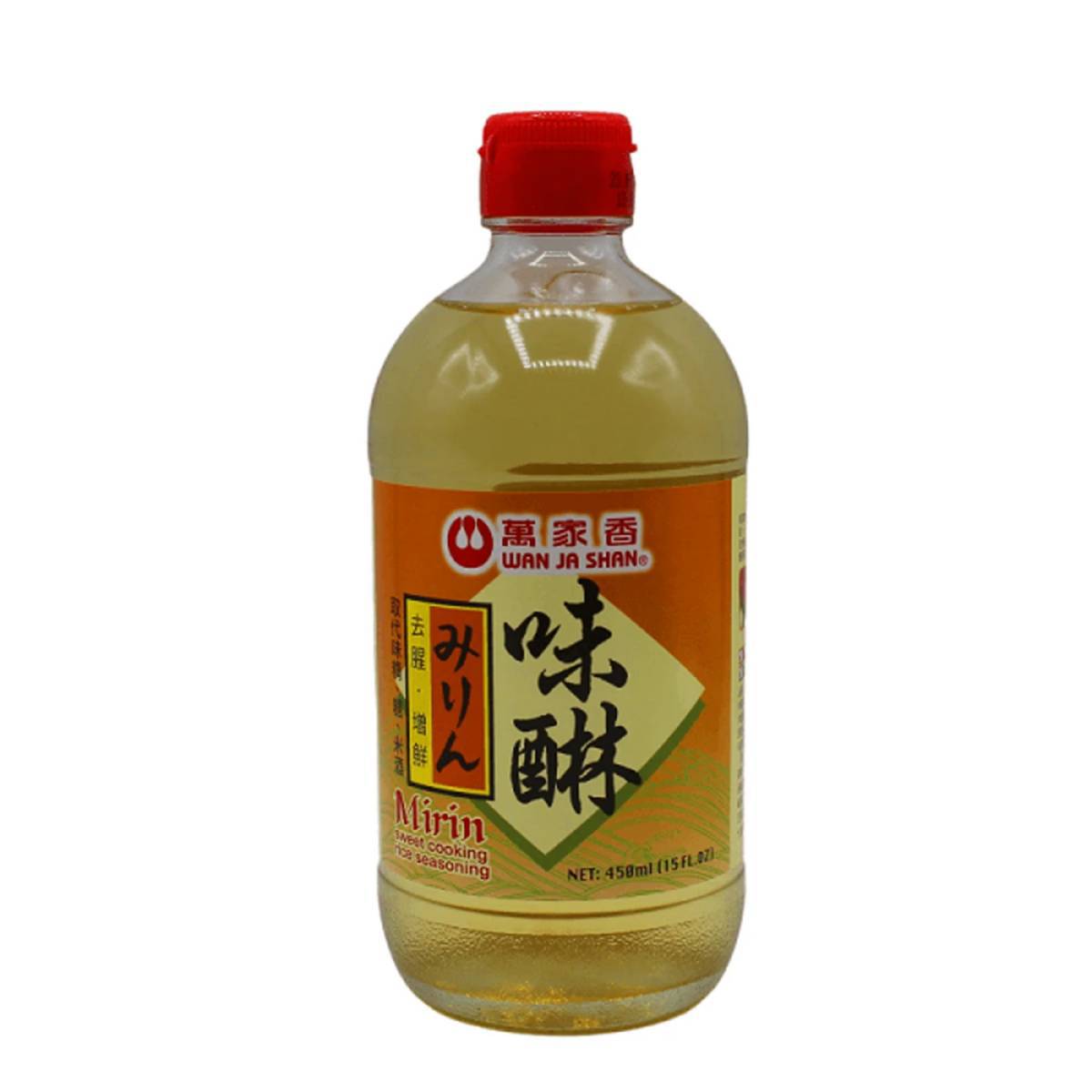

Side-by-side comparison
| Mirin | Cooking Rice Wine | |
|---|---|---|
| Origin | Japan | China (Shaoxing, Zhejiang) |
| Taste | Distinctly sweet, mild, slightly syrupy | Dry, savoury, nutty — closest to dry sherry |
| Main job | Sweetness, shine and glaze; balances salty soy | Removes raw meat and fish odours; adds fermented depth |
| Alcohol | Around 14% for true hon-mirin; much lower in "aji-mirin" seasoning | Around 15-18%, usually salted in supermarket "cooking wine" |
| Classic uses | Teriyaki, yakitori sauce, sukiyaki, simmered dishes (nimono), tamagoyaki | Stir-fried meat marinades, red-braised pork, drunken chicken, dumpling filling, soups |
| When it goes in | With the soy and sugar when building the glaze | Early — into the marinade, or splashed around the hot wok before the meat browns |
| If you cannot find it | Dry sherry or sake plus a little sugar | Dry sherry is the standard substitute; dry vermouth at a push |
Which one should you buy?
It depends entirely on what you cook. If you are drawn to Japanese food — teriyaki, yakitori, donburi, anything glossy and glazed — buy mirin first, and look for hon-mirin (本みりん) rather than "aji-mirin" seasoning, which is mostly corn syrup. If Chinese food is your entry point, buy Shaoxing wine: it appears in a huge share of Chinese savoury recipes and there is no convincing way to fake it. Both keep for months in a cupboard, so cooks who roam across both cuisines usually end up with both bottles.
Can you substitute one for the other?
Not directly. Using mirin where a recipe wants Shaoxing adds sugar the dish was never designed for — a stir-fry or braise turns cloyingly sweet and loses its savoury backbone. Using Shaoxing where a recipe wants mirin leaves a glaze thin, harsh and lacking shine. If you are stuck, the workable emergency fixes are: for mirin, use dry sherry or sake with a pinch of sugar; for Shaoxing, use dry sherry on its own. Do not reach for rice vinegar for either — it is acidic, not alcoholic, and will take the dish somewhere else entirely.
Frequently asked questions
Can I use mirin instead of Shaoxing wine?
Not really. Mirin is sweet and Shaoxing is dry and savoury, so mirin will make Chinese stir-fries and braises noticeably sweeter than intended. Dry sherry is a much closer substitute for Shaoxing wine.
Is mirin the same as sake?
No. Sake is a dry drinking rice wine; mirin is sweeter, thicker and made specifically for cooking. You can approximate mirin with sake plus sugar, but not the reverse.
What is the difference between hon-mirin and aji-mirin?
Hon-mirin (本みりん) is genuinely brewed and contains around 14% alcohol. Aji-mirin is a seasoning imitation built on corn syrup and additives with very little alcohol. Hon-mirin gives a noticeably better glaze.
Is supermarket "cooking wine" the same as Shaoxing wine?
Chinese 料酒 sold as cooking wine is usually Shaoxing-style rice wine with salt added, which makes it non-drinkable and exempt from alcohol taxes. It works fine for cooking — just account for the extra salt.
Can I cook these without alcohol?
The alcohol largely cooks off, but if you avoid it entirely, use unsalted stock with a splash of rice vinegar in place of Shaoxing, and a sugar-and-water syrup with a little rice vinegar in place of mirin. Expect a flatter result — these ingredients are doing real work.